
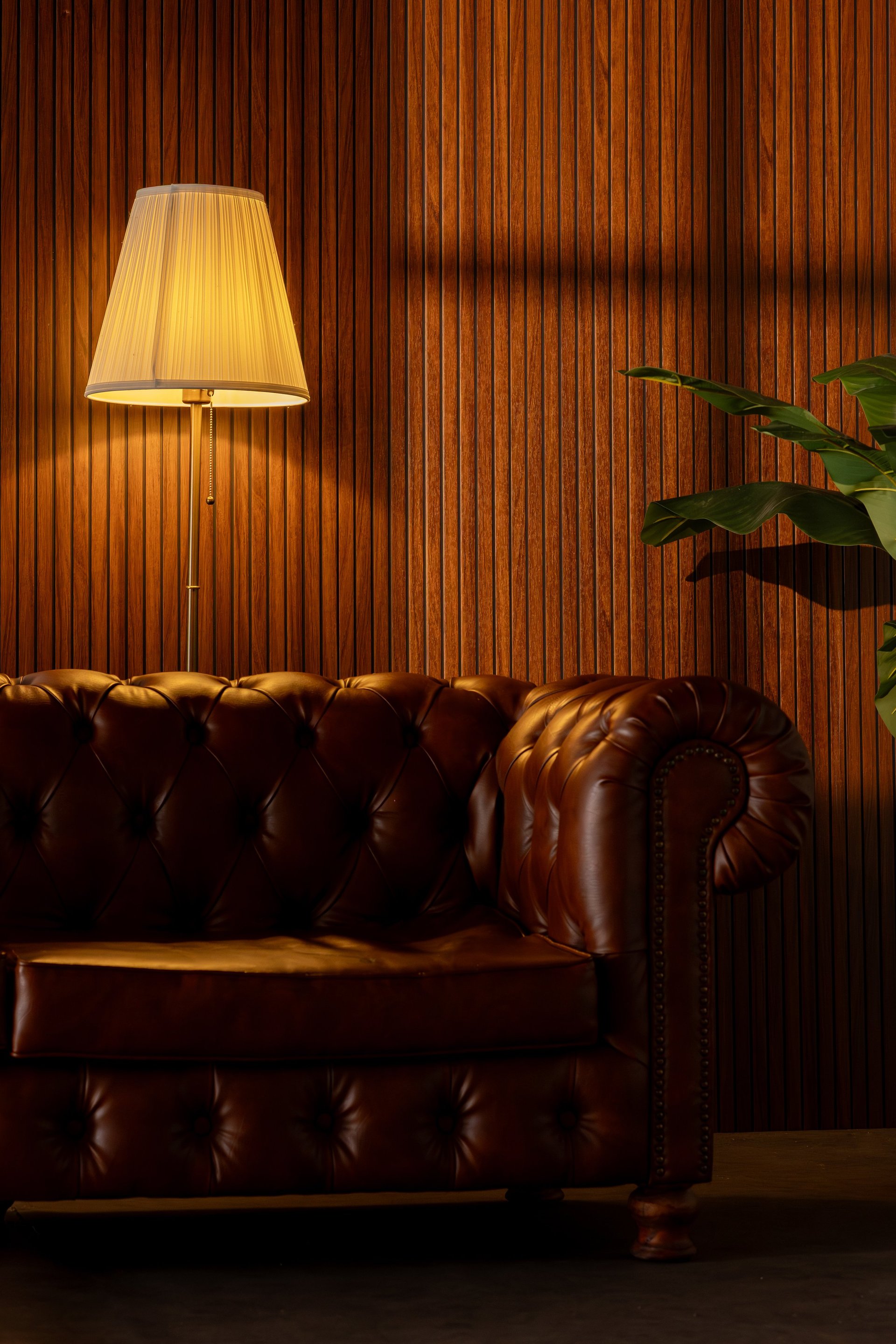
A pre-owned Italian leather sofa or a solid wood dresser can serve a Tampa Bay home for years. It just has to be made of real materials, arrive in sound shape and get care that suits Florida air. This guide covers what to buy and how to keep it, from top-grain leather to corduroy and wood.
In Clearwater, the biggest threat to a great used sofa usually isn't the dog. It's the house. Picture a pre-owned leather sectional bought for far less than new. It lands right beside the sliders, gets wiped down with kitchen spray, and sits in a shut-up house with the AC off during an August trip. By next summer the window-side arm is faded and stiff, the cushions smell musty, and the bargain is gone.
The short answer: how to care for luxury used furniture in Florida
Caring for luxury used furniture in Florida means managing three things: humidity, sun and oils. Keep the piece in steady air-conditioning, not on a lanai, in a garage or in a closed-up house. Keep it out of direct afternoon sun. And deal with sunscreen, body oils and spills before they set. After that, the routine is simple: dust and wipe weekly, check and rotate monthly, and do a deeper check when the seasons change. Match your care to the material, because top-grain leather, bonded leather, performance fabric and solid wood each need something different.
Is luxury used leather furniture worth it here? Yes, if it's real top-grain or full-grain leather that has lived indoors and that you've inspected in person. Sand and pet hair wipe off leather far more easily than they lift out of pale fabric, and a well-made used piece has already proved it holds its shape. Bonded leather and look-alikes are a different story, covered below.
Why luxury used furniture needs Florida-specific care
Most furniture care advice is written for places that are dry half the year. Ours isn't. Leather, wood and natural fibers soak up moisture and give it back. In a cool, dry room that cycle stays calm. In a hot, damp one it doesn't, and Pinellas homes put furniture through a few specific tests:
- Humidity. Rooms without steady AC, such as a garage, a storage unit, a screened porch or a seasonal condo shut up for the summer, are where mildew starts and wood swells.
- Sun through sliders. Big glass doors facing the water or the pool give furniture hours of direct UV. Leather fades and dries, fabric bleaches and wood finishes go cloudy.
- Sunscreen, bug spray, chlorine and salt. These Gulf Coast residues darken leather on headrests and arm fronts and dry out finishes.
- Sand. Beach sand that settles into upholstery grinds at the fibers every time someone sits down.
A luxury piece is worth protecting because the materials are good. Good materials last a long time, but they still react to the air around them.
Know the material: top-grain, full-grain, bonded and leather-look
Care starts with knowing what you own, and furniture listings use the word "leather" loosely.
- Full-grain leather is the hide's top surface left whole, with no sanding. It's the toughest grade, keeps its natural marks and slowly darkens into a soft patina with use.
- Top-grain leather gets its surface lightly buffed to even out blemishes, then sealed with a finish. You'll find it on most quality sofas and sectionals, and that sealed surface suits busy Florida households.
- "Leather match" pairs genuine leather on the seats, back cushions and arm tops with color-matched vinyl or split leather on the outer panels. Reclining sectionals use it a lot.
- Bonded leather starts as leftover leather scraps, ground up and glued to a cloth base, then coated with a polyurethane skin. That skin tends to flake away over time, and Florida heat, damp air and body oils hurry it along.
- PU or "leather-look" pieces are fully synthetic. Our listing for the gray power reclining sectional uses that exact term because it's the honest description.
How to tell in person: Look closely. Genuine leather shows uneven grain and tiny pores, picks up the warmth of your palm within seconds, and wrinkles gently when you press it. Bonded leather and PU tend to repeat the same stamped pattern, stay cooler to the touch and show woven cloth on any raw edge.
Caring for luxury used leather furniture in Florida
Top-grain and full-grain leather
- Dust weekly with a soft, dry microfiber cloth. Dust and grit slowly wear down the finish.
- Wipe as needed with a cloth barely dampened with plain water, then dry it. Skip all-purpose sprays, alcohol, baby wipes and anything with ammonia or bleach. They strip the protective finish.
- Condition sparingly with a product made for your leather type, and test it on a hidden spot first. Finished top-grain needs less than most people think. Too much leaves a sticky layer that grabs dust, and in humid weather it can hold moisture against the surface. In an air-conditioned Florida room, a couple of times a year is often plenty. Let the leather tell you: condition when it looks dull or feels dry, not because the calendar says so.
- Unfinished or aniline leather is soft and natural, with no visible coating. Touch it with a damp fingertip on a hidden spot and the color deepens briefly as the moisture sinks in. It absorbs everything, so blot spills right away and never rub.
Bonded leather and PU: what NOT to do
- Don't use leather conditioner. There's very little real leather to feed, and oils can soften the polyurethane skin and speed up peeling.
- Don't scrub, and don't use solvents or harsh cleaners.
- Don't pick at a peeling spot. It will spread. Peeling on bonded leather is a one-way street. No cosmetic touch-up will reverse it.
- Do wipe it with a damp cloth and a drop of mild soap if needed, dry it right away, and keep it out of sun and heat.
Freshening a second-hand leather piece at home
Pieces on the Furniture Haus floor have already been inspected and cleaned, so you aren't starting from scratch. If you still want your own fresh start, keep it gentle:
- Vacuum the seams, the piping and the gap under the seat cushions with a soft brush attachment.
- Wipe the surface with a cloth wrung out in warm water and a few drops of mild, unscented soap. Follow with a cloth dampened in plain water, then dry it.
- Skip disinfecting wipes, alcohol sprays and vinegar mixes. They can dry out or dull the finish, and the damage shows first on arm fronts.
- Let it dry fully in an air-conditioned room before you condition, if it needs conditioning at all.
Spills, body oils and pets
- Spills: blot with a clean, dry cloth. Start at the edges and press toward the center so the spill doesn't spread. Let it air dry, and never aim a hair dryer at it.
- Sunscreen and bug spray: wipe arm fronts and headrests after beach or pool days. Those are the spots where darkening shows first.
- Body oils: a throw over a favorite headrest or seat saves years of wear.
- Pets: trim nails, and keep a washable throw where the dog sleeps. Fine scratches on finished leather often fade with gentle buffing. Deep ones are permanent.
- Dye transfer: new dark jeans can leave a blue cast on cream and white leather. Put a throw down until the denim has been through the wash a few times.
Fabric, corduroy and performance-fabric sectionals
The Furniture Haus floor isn't only leather. It also carries corduroy U-shaped sectionals, woven-fabric sectionals and cream performance weave, and those need a different routine.
- Find the cleaning code on the tag under the seat cushions or on the deck. The letter tells you what's safe. W is for water-based upholstery cleaners. S is for water-free solvent cleaners only, since plain water can leave a ring. W/S lets you use either. X rules out liquids entirely, so stick to vacuuming and light brushing. Test any cleaner on a hidden spot first.
- Vacuum weekly with an upholstery attachment, including the crevices, where sand collects.
- Corduroy: vacuum and brush along the ribs, never across them, so the wales stay even. Blot spills instead of scrubbing, which flattens the pile.
- Performance fabric buys you time, not immunity. Spills bead up for a bit before they soak in, so blot fast and still follow the cleaning code.
- Rotate and flip cushions about once a month, if they're reversible, so wear and sun exposure even out.
- Don't soak cushions or machine-wash removable covers unless the tag says you can. Covers can shrink, and wet foam takes a long time to dry in Florida air.
- Light fabrics near windows fade fastest. Close the blinds during the hours the sun hits them.
Wood dressers, nightstands and bedroom sets in humidity
Dressers, chests and nightstands need care too. Wood swells in damp air, and that's when drawers start sticking and finishes start clouding.
- Keep the AC steady. Big swings between a cold room and a hot, damp one are what move wood. If you travel in summer, set the thermostat higher instead of turning the system off.
- Leave a little air gap between a dresser and an exterior wall, and don't block AC vents.
- Use coasters and mats. A sweating glass of iced tea in July can leave a cloudy white ring in a wood finish.
- Dust with a soft, slightly damp cloth, then dry it. Avoid heavy wax buildup on finished pieces.
- A drawer that suddenly sticks has usually swollen in damp air, not broken. Empty it, let the room dry out, and check the runners for debris.
- Air out drawers a few times a year. Musty smells start in closed, dark spaces.
- Painted coastal finishes (white, sky blue): wipe gently. Abrasive cleaners dull painted surfaces.
- Hardware: chrome and brass-toned pulls can spot or tarnish in salt air. Wipe them dry.
A Florida care routine: weekly, monthly, seasonal
Weekly
- Dust leather and wood. Vacuum fabric, including the crevices.
- Wipe arm fronts and headrests, especially after beach and pool days.
- Check for spills and pet marks before they set.
Monthly
- Rotate and flip cushions.
- Check the side nearest the window for fading, and adjust the blinds if one side is getting more sun.
- Open every drawer and look and smell for damp.
- On power recliners, run each seat through its full range and check the cords for pinches.
Seasonally (start of summer, after storm season, before guests)
- Condition genuine top-grain and full-grain leather only if it looks or feels dry. Test first.
- Move furniture a few inches to check what's been hiding under it and to spread the wear on rugs.
- Air out the drawers in dressers and chests.
- Before a trip, leave the AC running and close the blinds on sun-facing windows.
Your first week with a luxury used piece at home
- 1Place it before it arrives. Pick a spot out of direct afternoon sun, away from AC vents and with a small gap from exterior walls.
- 2Give it a day to settle in the room's air before you condition or deep-clean anything.
- 3Re-inspect it in your own light. Daylight at home shows color differently from showroom lighting. Note any marks so you know your starting point.
- 4Add felt pads under wood legs to protect tile and wood floors when the piece gets moved.
- 5Spot test your cleaning products on a hidden area now, not on the day of a spill.
- 6Watch the sun for a few days. Notice where it lands in the morning and late afternoon, and adjust the blinds or the placement.
- 7Start the routine. The first weekly wipe and the first cushion rotation turn into habits quickly.
A Saturday on Cleveland Street: buying with care in mind
Picture a couple from Tampa driving over the Courtney Campbell Causeway on a Saturday morning. Their living room has a wall of sliders facing the pool, and they want one luxury piece: leather or a deep fabric sectional, not a flat-pack sofa.
They walk into the showroom on Cleveland Street without an appointment and start with the material. They press a palm on a leather seat to feel it warm and crease, then run a hand around to the outer back to see if the texture changes. They sit on a genuine leather piece, then on a leather-look one. They lift a cushion and smell it, and brush the pile on a corduroy sectional with their fingers to see how it springs back. Then they talk about the sliders. Leather and a heavy weave handle sand differently, and a cream piece needs a plan for denim and sunscreen.
They leave knowing which piece suits the room and their habits. They also know the care routine they're signing up for, and that routine is what makes a luxury used piece last.
The showroom inspection checklist for luxury used furniture
Bring this with you. Good care starts with buying a piece that's worth caring for.
Leather
- Ask what it is: full-grain, top-grain, leather match, bonded or synthetic.
- Look for irregular grain and pores. Check that the outer back and sides match the seats.
- Look for peeling, flaking or bubbling on headrests and arm fronts. Any peeling at all is a hard stop.
- Look for cracks that open when you flex the leather, and darkening from body oils.
Fabric and corduroy
- Find the cleaning code tag under the cushions.
- Run a hand along the seat's leading edge for thin or shiny spots. Compare each arm with the inside back, since a lighter arm usually sat near a window.
- Corduroy: check that the pile is even with no crushed or bald patches.
Wood case goods
- Open every drawer. It should run smoothly, with no musty smell.
- Look for white rings, a cloudy finish and water staining underneath.
- Check the pulls and metal hardware for rust.
Florida red flags (every piece)
- A musty odor that stays after airing is a hard stop.
- Look for white powder or dark speckling in seams and under the deck.
- Check seams, piping and the underside for tiny dark spots or shed skins, which can point to bed bugs.
- Ask where the piece lived before it came in.
Moving parts and fit
- Run every power recliner all the way out and back.
- Bring your room and doorway measurements.
- Ask about holds, returns and delivery before you pay.
Luxury used furniture in Tampa Bay: recent finds on the Furniture Haus floor
At the last inventory check, the Furniture Haus floor included:
- A Havertys black leather sectional with chaise and center console.
- Cream leather sectionals with chaise, one of them reclining, and a white leather power reclining loveseat and chair set.
- A gray leather-look power reclining sectional, worth sitting on right after a genuine leather piece.
- A cream Rawcliffe 3-piece sectional in performance weave and a blue corduroy U-shaped sectional with dual chaises.
- Bedroom sets, including a dark espresso 4-piece dresser set and an off-white coastal 3-piece collection.
Each listing is one piece, not a line we restock, and things sell off the floor. Browse the current listings at https://www.furniturehaus.co/merchandise, then call or text to confirm before you drive.
Luxury used furniture care questions Clearwater buyers ask
Should I condition bonded leather?
No. Wipe it with a damp cloth and keep it out of heat and sun. Conditioners can speed up peeling.
How often should I condition a leather couch in Florida?
Less often than you might expect. Finished top-grain in a steadily air-conditioned room usually needs it only a couple of times a year, and only when it looks dull or feels dry. Bonded leather and PU never need it.
Is Florida humidity bad for leather furniture?
Steady humidity in a cooled room is fine. The damage comes from long stretches of warm, damp air, like a closed-up condo in July or a piece stored in the garage. That's when mildew and swelling start. If you spot a light film of mildew, wipe it off with a dry cloth, get the piece back into cool, dry air and keep an eye on it. If it keeps coming back, the moisture has gone deeper than a wipe can reach.
Is it safe to buy used leather furniture?
Yes, when you can see it in person and know where it has been. Smell the cushions, check the seams and the underside for dark specks or signs of pests, and ask about its history. Buying from a showroom that inspects and cleans each piece takes much of the guesswork out of it.
Does Furniture Haus clean or repair furniture I already own?
No. Furniture Haus sells furniture. We don't offer cleaning, repair, restoration or reupholstery. We inspect and clean each piece before we put it out for sale, and once it's home, this guide is your routine.