Start with the room, not the sofa
Measure the wall the sectional will sit against, corner to corner, and write the number down. Then measure the same wall in your second-choice position, because a sectional often works in one corner of a room and not another. Note where the windows, doors, air vents and outlets fall along that wall — a sectional that blocks the only outlet you use for a lamp is a problem you will notice every evening.
Next, measure the depth of the space in front of that wall. A sectional needs room to be sat on and room to walk past. The general rule is a minimum of 30 inches of clear walking space along any route people use to cross the room, and 18 inches between the sofa and a coffee table. In a smaller Clearwater condo the walking route is often the tightest constraint, not the wall itself.
- Measure the wall in every position you're considering, not just the first one.
- Note windows, doors, vents and outlets before you commit to a wall.
- Leave at least 30 inches of clear walking space on routes people actually use.
- Leave 18 inches between the sofa and a coffee table.
Width, depth and chaise depth are three different numbers
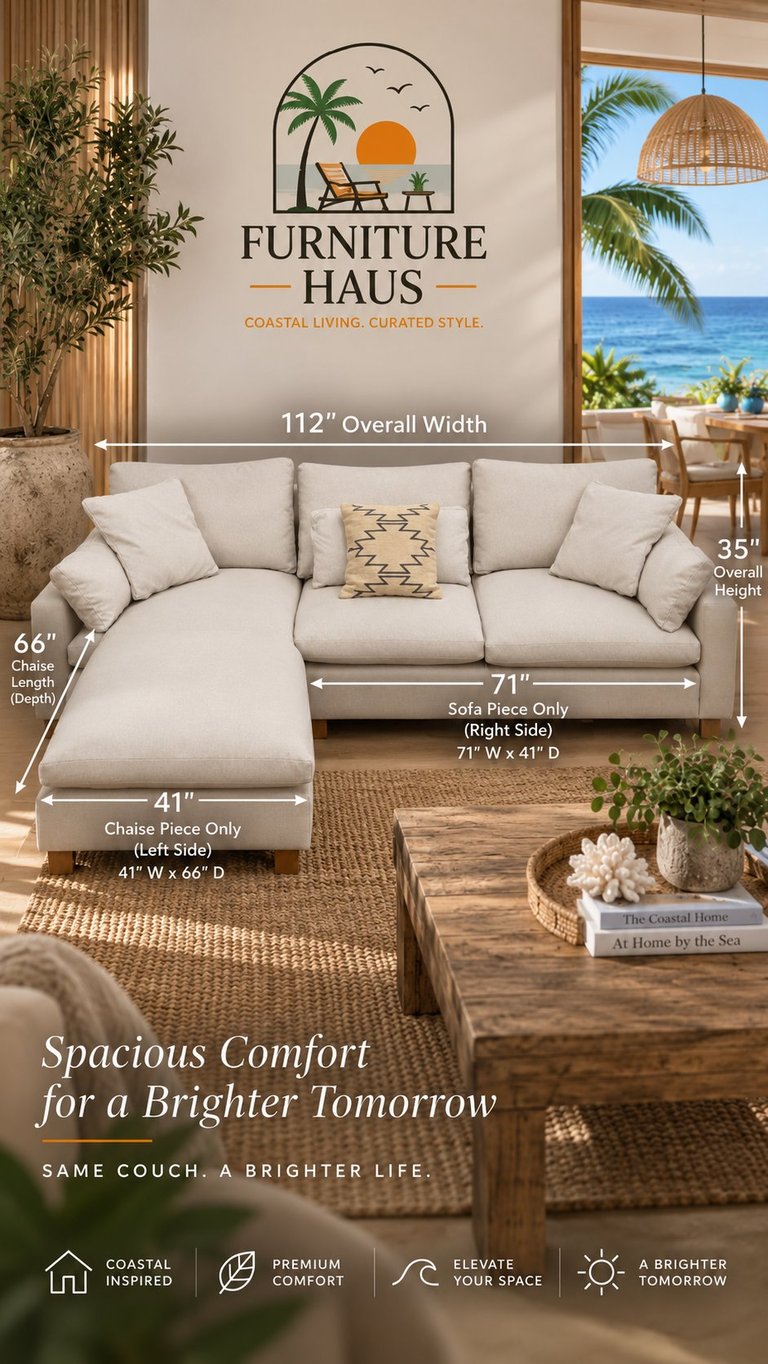
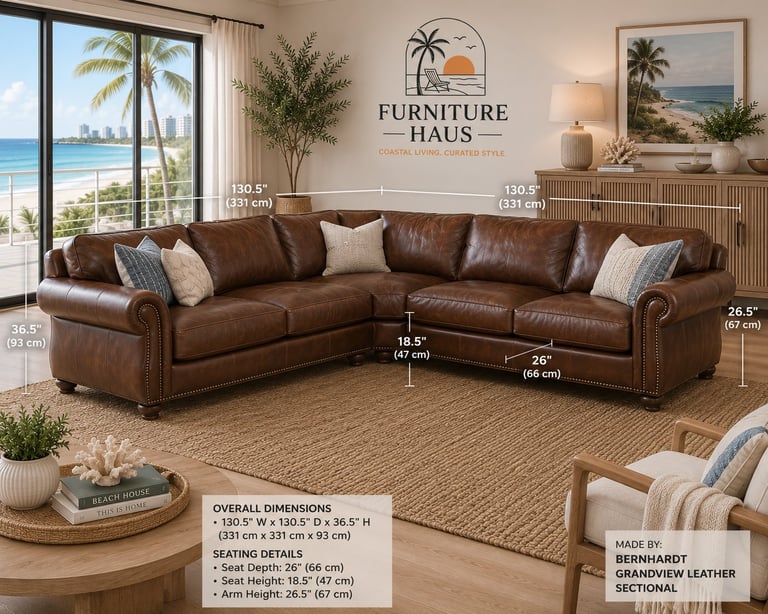
Overall width is the full span of the piece, wall to wall. Overall depth is how far it projects into the room from the wall it sits against. Chaise depth is how far the extended section reaches out — and this is the number buyers most often overlook, because a chaise projects considerably further into a room than the rest of the sofa.
If a listing shows the sofa section and the chaise section separately, that is the seller being precise rather than difficult. It lets you confirm the chaise fits alongside whatever else shares that side of the room. Where a dealer has given measurements, we list them exactly as supplied on the product card — check there before you measure.
- Overall width — the full span along the wall.
- Overall depth — how far the piece projects into the room.
- Chaise depth — how far the extended section reaches; usually the deepest point.
- Sofa section and chaise section, when the seller gives them separately.
Which way should the chaise face?
A chaise extends to one side, so its direction decides how the piece sits in a room. Stand facing the wall where the sofa will go: if the extended section is on your left, the chaise runs to the left as you look at it from the front. Where a chaise ends up matters — against a window it may block light, in a walkway it will be stepped over for years.
Look at the product photo and match the chaise's position to the open side of your room. If you are unsure whether a particular piece will work in your space, bring the room's measurements and a photo of the corner to the showroom and we can check it against the actual sofa.
Measure the path in, not just the room
This is where most sectionals fail. Measure the narrowest point between your front door and the room the sofa is going in, and do it as a chain of clearances rather than one number: the front door width with the door open, the tightest spot in any hallway, any turn at the top or bottom of a staircase, and the doorway into the room itself.
On stairs, the limiting measurement is usually not the width but the height and the turn at the landing — a piece that is wide and deep can be impossible to pivot on a tight switchback. In a building with an elevator, measure the cab's interior and its door opening, and check the building's ceiling height in the hallway. If you live in a condo or apartment, check whether a freight elevator needs booking.
- Front door width, measured with the door open.
- The narrowest point in every hallway along the route.
- Turns at the top and bottom of stairs, and each landing.
- Elevator cab interior and door opening, plus any booking requirement.
Delivery paths and the last few feet
The delivery path continues inside the room: the clear floor between the door and the final position, and any furniture already there that will need moving first. Measure that route too, and decide in advance what moves where. It is far easier to clear a path before the delivery arrives than while it is waiting.
Many sectionals separate into sections, which is precisely what makes tight entryways workable. Ask how a specific piece breaks down before you rule it out — the answer is often that it does, and the piece fits after all.
Write it all down before you shop
A single sheet with the room's wall lengths, the clear walking space available, the chaise direction you want, and the tightest measurement along your delivery path turns a difficult decision into a simple comparison. Bring it with you.
Every sectional on our floor is a single piece, so once it sells there is not another. If a piece fits the numbers on your sheet, the sensible move is to call and confirm it is still here, then come and sit on it.