Price, and what the discount is really made of
The headline difference is price, and on well-made furniture it is large. A sofa from a brand that sells in the thousands new commonly reaches a used floor at a small fraction of that, because resale value for furniture is driven by how quickly a dealer needs the space rather than by what the piece originally cost. The saving is genuine, and it is largest on exactly the pieces that were expensive to begin with.
What you are not getting is the retail experience bundled in: no showroom of a dozen identical units, no custom fabric selection, no factory warranty, and no returns. Those are real things, and worth knowing you are trading away rather than discovering later.
- The largest savings land on brands whose new prices were high to begin with.
- Resale pricing reflects how fast a dealer needs the floor space, not original cost.
- New furniture bundles in a warranty, returns and customization that used does not carry.
Construction is where used often wins
A used piece has already been built and used, which tells you something a showroom cannot. If it has held its shape for years, the frame and joinery have proven themselves. New furniture at a low price often has not — and may not, if the frame is stapled rather than joined.
Inspect what a photo cannot show you: lift a corner and feel for flex, check that the frame is solid rather than the cushions merely firm, and look at the joints under the piece. Older furniture from established makers is frequently the better-constructed option, which is why restoring an older piece is sometimes the smarter financial choice than buying a cheap new one.
Condition: what to look for, and what to accept
Condition is where used furniture asks something of you. Look at the frame first: press down on the arms and the corners and listen for creaks or feel for movement. Check the seat cushions for sagging by pressing where people sit rather than where they do not. On leather, run a hand over the surface for cracking and check the seams; on fabric, look for thinning at the front edge of the seat and for sun fading on the side that faced a window.
Be realistic about what is cosmetic and what is structural. A scuff on a leg is a repair; a soft, flexing frame is a reason to walk away. Furniture that has lived in a Florida home deserves a specific look for water staining on the underside of wood pieces and for rust on metal frames and springs.
- Press down on arms and corners — movement or creaking points at the frame.
- Press the seat where it is actually used, not at the edge.
- Leather: check for cracking and open seams. Fabric: check for thinning and sun fade.
- Look for water staining underneath wood and rust on metal — relevant in Florida homes.
Availability and the speed of the decision
A new sofa can be ordered in the fabric you want, and it will still be available next month. A used piece is a single unit. When it sells, it is gone, and there is no ordering another in a different colour.
That cuts both ways. You get the chance to own something that is no longer in production, in a quality that would cost several times as much new — but only if you decide while it is here. The practical habit is to call and confirm a piece is still on the floor before making the trip, and to be ready to decide when you see it rather than returning the following weekend.
Every listing on our merchandise page is a single unit. We list what is physically on the floor, not a catalogue we can reorder from.
Delivery and measurements
Delivery is largely the same proposition either way — a piece has to get from a building to your room, and somebody has to carry it. What differs is that a used piece can be measured and inspected before purchase, so you know exactly what will arrive and what the delivery path has to accommodate.
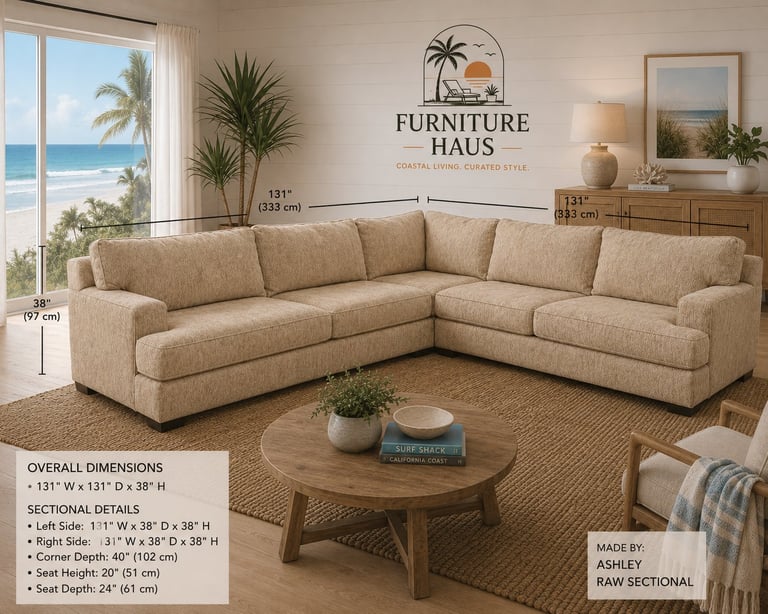
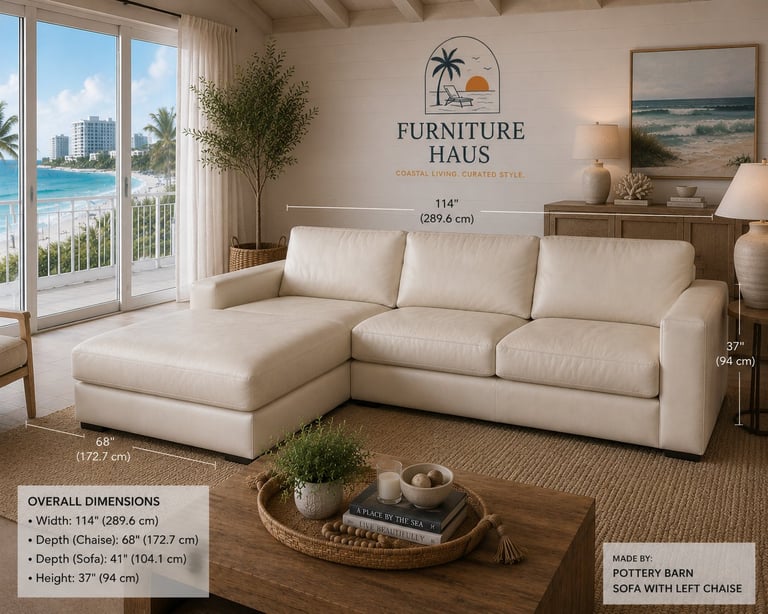
Measure your doorway, your hallway and your room before you buy, whichever way you go. A piece that does not fit through the door is not a bargain at any price. For a sectional specifically, our guide to measuring your room walks through the full set of measurements.
Style: the case for something you cannot buy new
New furniture at a given price point tends to look like the new furniture at that price point, because it is built to the same brief for the same market. A used floor is the opposite: pieces arrive from many makers and many decades, in finishes and shapes that are simply not in production any more.
For anyone furnishing a coastal Florida home, that range is worth something. A well-made older piece in the right wood or the right shade settles a room in a way that ordering from a catalogue rarely does.
The advantage of inspecting in person
None of the above replaces sitting on the thing. Firmness, depth, how the back supports you, and whether the colour works in daylight are all things a photo cannot convey. It is the single strongest argument for buying used furniture from a showroom you can walk into rather than a marketplace listing you cannot.
That is the model here. Everything is on the floor, priced as shown, and you are welcome to inspect it thoroughly before you decide — bring a tape measure and a photo of your room if you like.